
Key Takeaways
- Aluminium channel sizes in Australia use width × height × thickness notation (e.g., 25 × 25 × 3 mm), with lengths from 1 m to 6.5 m at buyalength.com.au
- Custom cut lengths reduce waste and onsite cutting time
- Common uses include shelving, frames, trailers, boat fit-outs, shopfitting and residential renovations
- Size selection depends on load, span, fixing method and environment (indoor vs coastal outdoor use)
- Check pricing on buyalength.com.au or request a quote for larger projects
Introduction to Aluminium Channel Sizes
Aluminium channels are lightweight, durable, and versatile, making them suitable for construction, manufacturing, and transportation applications across Australia.
The U-shaped extrusion makes them easy to work with for various fabrication applications, from edge protection to structural framing.
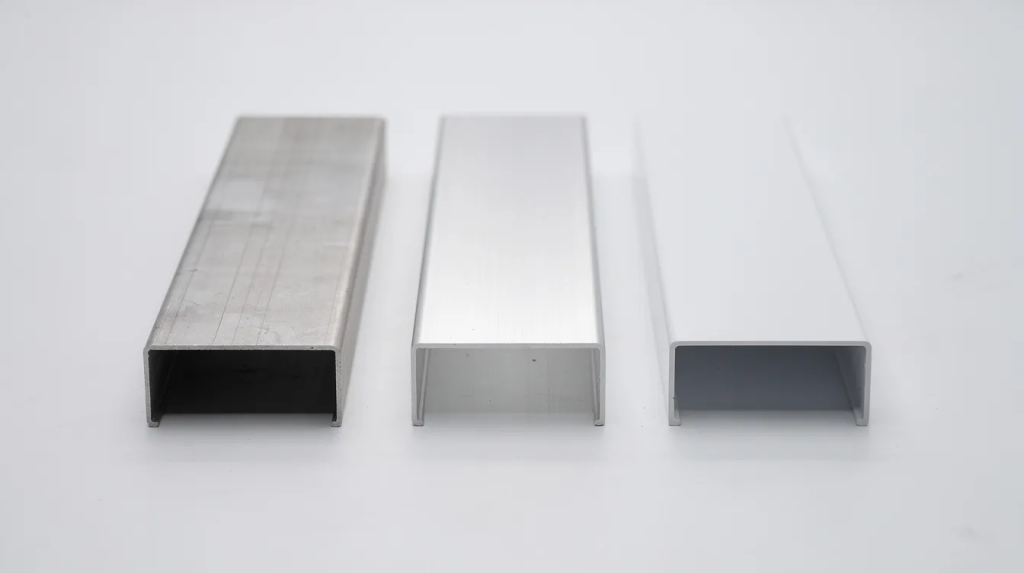
Getting your aluminium channel sizes right matters for strength, appearance and cost.
Channels are available in over sixty different equal and unequal profiles, used in homes, utes, trailers, workshops and commercial fit-outs across Sydney, Melbourne, Brisbane and Perth.
Sizes are specified in millimetres—for example, 20 × 20 × 1.6 mm for a small U channel or 50 × 25 × 3 mm for an unequal channel—with standard lengths from 1 m to 6.5 m.
Buy A Length specialises in aluminium extrusions cut to length for online customers Australia-wide, including regional deliveries.
Browse aluminium channel sizes at buyalength.com.au
How Aluminium Channel Sizes Are Specified
Australian suppliers use a standard notation: width × height × wall thickness in mm, plus length in metres.
Understanding this helps you find the right profile quickly. Key specifications include:
- External dimensions: The standard measurement convention
- Wall thickness: Ranges from 1.6 mm (light-duty) to 5+ mm (structural)
- Weight per metre: Directly affects handling and freight costs
Small light-duty structural channels commonly measure 10 × 10 × 1.6 mm, 12 × 12 × 1.6 mm, and 16 × 16 × 1.5 mm.
Medium standard architectural channels typically include 25 × 25 × 3 mm, 40 × 20 × 3 mm, and 50 × 50 × 3 mm. Large heavy-duty structural channels can reach sizes like 100 × 50 × 9 mm and even up to 254 × 115 × 12.5 mm for industrial use.
Equal channels (e.g., 25 × 25 × 3 mm) offer symmetrical strength ideal for framing, while unequal channels (e.g., 50 × 25 × 3 mm) prioritise one-directional support for shelving lips.
Buy A Length lists exact dimensions, alloy/temper (6060 T5 or 6063 T5) and finish (mill or anodised) on every product page.
View our aluminium channel range HERE.
Common Aluminium Channel Sizes and Typical Uses
Certain channel sizes have become go-to choices across Australian trades and DIY projects.
Popular equal channels:
- 12 × 12 × 1.6 mm: LED strip housings, panel edges
- 20 × 20 × 1.6 mm: Wardrobe tracks, light framing
- 25 × 25 × 3 mm: General bracing and brackets
- 40 × 40 × 3 mm: Medium-duty frames
- 50 × 50 × 5 mm: Heavier-duty applications
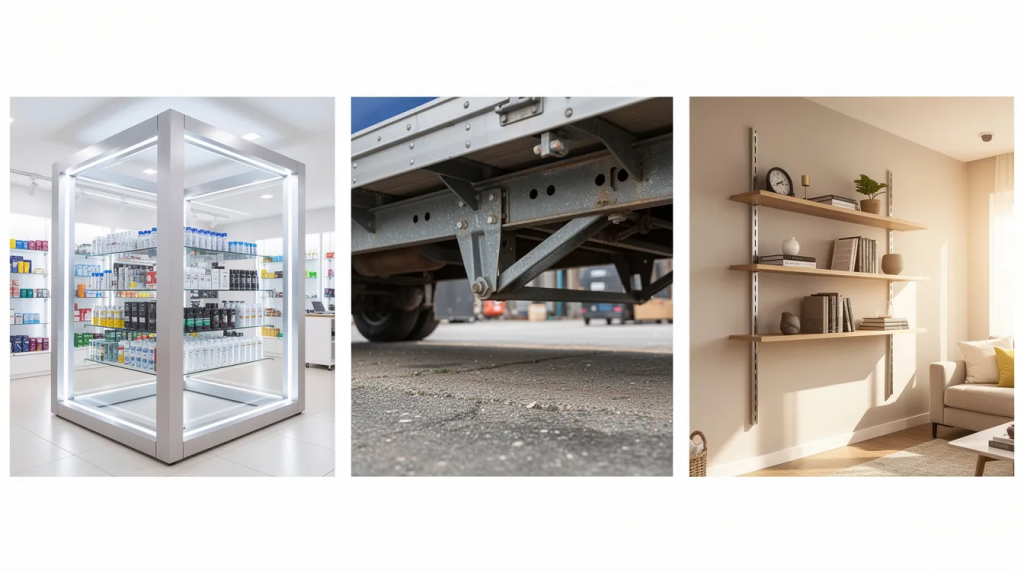
Large structural C-channels are used in the fabrication of truck bodies, trailer frames, and bullbars. Unequal channels like 50 × 25 × 3 mm and 75 × 50 × 5 mm suit shelving and racking.
Sector applications:
- Residential: Decking edges, sliding doors, shower screen framing
- Commercial: Shopfitting, signage frames, counters
- Automotive/marine: Ute trays, camper builds, boat interiors
U-channels are standard for glass and mirror installations, creating minimalist borders for partitions and railings.
Buy A Length stocks a practical range balancing availability, price and strength for most projects.
Need help with sizing? Contact us HERE.
Choosing the Right Channel Size for Your Project
Correct sizing prevents bending, rattling and premature wear while avoiding overspending on unnecessary material.
Selection factors:
- Load capacity and span length
- Channel orientation (open side up, down or sideways)
- Fixing method: screws, rivets, welding, adhesive or brackets
- Compatibility with timber, steel or other aluminium
- Aesthetic visibility in finished work
A 20 × 20 × 1.6 mm channel suits light trim applications. For support spans over 800–1000 mm, step up to 40 × 40 × 3 mm. These channels are ideal for outdoor use due to their strength and corrosion resistance, and they can be easily cut and shaped for custom projects.
For structural or heavily loaded applications, consult a builder or engineer. Contact Buy A Length for guidance on selecting economical sizes from the stocked range.
Length Options, Cutting and Ordering Online with Buy A Length
Beyond width and thickness, choosing the right length minimises waste and simplifies installation. Stock lengths typically range from 3 m to 6.5 m.
Aluminium channels can be customised in length and are often available in both clear anodised and mill finish options.
Buy A Length lets you specify custom cuts during checkout:
- Select channel size on the product page
- Choose finish if options exist
- Enter required cut lengths and quantities
- Review automatic price and freight estimate
- Complete secure checkout
Benefits include reduced onsite cutting time, less offcut waste, and easier transport.
Dispatch typically occurs within a few business days Australia-wide with tracking provided.
Add an extra length for contingencies—it’s often cheaper than arranging a second delivery.
Grades, Finishes and Compliance for Aluminium Channels
Most aluminium channels on Australian websites use architectural alloys like 6060 or 6063. 6063/6060 aluminium alloy provides the best surface finish for painting or anodising.
They are easy to extrude into complex shapes. 6061 is preferred for load-bearing framing due to its superior strength, while 6063 is chosen for its smooth surface and finishability.
Common finishes:
- Mill finish: As-extruded, ideal for hidden framing
- Clear anodised: Enhanced corrosion resistance with satin silver appearance
- Powder-coated: Colour options for visible applications
Anodised finishes enhance corrosion resistance and hardness—essential for coastal or harsh outdoor environments.
Z-channels act as flashing in roofing and siding to shed water while maintaining clean lines.
Buy A Length sources from reputable Australian suppliers meeting local standards.
For information on specific grades or finishes for bulk orders, contact our team HERE.
Applications by Sector: Where Different Channel Sizes Work Best
Choosing the right size depends on industry and environment, not just theoretical load capacity.
Common applications of aluminium channels include edge protection, sliding type supports, light construction projects, decoration, shop fittings, vehicle construction, and boat building.
DIY and home renovation benefits from 20 × 20 × 1.6 mm channels for LED housings and door edge protection. Trade and construction projects use hat channels to level masonry walls or ceilings, creating a “chase” for wiring and insulation. T-slot channels are essential for modular assembly, industrial automation, and custom tool tracks.
Automotive and trailers favour 25 × 25 × 3 mm for camper drawer slides, while 6061 aluminium alloy—significantly stronger than 6063—offers excellent weldability and is used where load-bearing is critical.
Buy A Length’s flexible ordering suits one-off builds, prototyping and smaller fabrication shops. Save your preferred sizes and revisit them for future projects.
Frequently Asked Questions about Aluminium Channel Sizes
These FAQs address common sizing and ordering concerns.
What is the smallest aluminium channel size I can buy?
Many Australian projects use very small channels such as 10 × 10 × 1.6 mm or 12 × 12 × 1.6 mm for trims and LED strips.
Availability depends on current stock at buyalength.com.au. You can purchase single lengths where offered, making it economical for small DIY jobs.
Can I mix different aluminium channel sizes in the same order?
Yes. Add multiple sizes, lengths and quantities to a single cart, with freight calculated across the combined order.
This is ideal for testing different profiles on a prototype or renovation project.
How accurate are the cut lengths I receive?
Buy A Length cuts channels to within a practical trade tolerance, typically within a few millimetres.
For critical applications, allow a small trimming margin or confirm expectations with the team before placing large orders.
Can I drill, cut or weld aluminium channels myself?
Aluminium channels can be cut with standard metal saw blades, drilled with HSS drill bits, and TIG or MIG welded by experienced fabricators.
Use eye and hearing protection, clamp work securely, and test cuts on offcuts first.
Can I order custom aluminium channel sizes that aren’t listed online?
The website lists commonly requested sizes, but custom profiles may be available via special order depending on volume.
Contact Buy A Length directly with drawings or dimensions for a quote on non-standard channels.