
A pet door for a screen or security door is a framed flap fitted through the door’s mesh, so cats and dogs can come and go while the door stays shut.
The right size depends on your pet’s shoulder width and height. Buy A Length stocks Petway-style pet doors in three sizes, with openings from 240 x 190mm to 400 x 260mm, from around $98.
Each one is made for screen and security doors, hinged or sliding, and comes in black or white to suit most door frames.
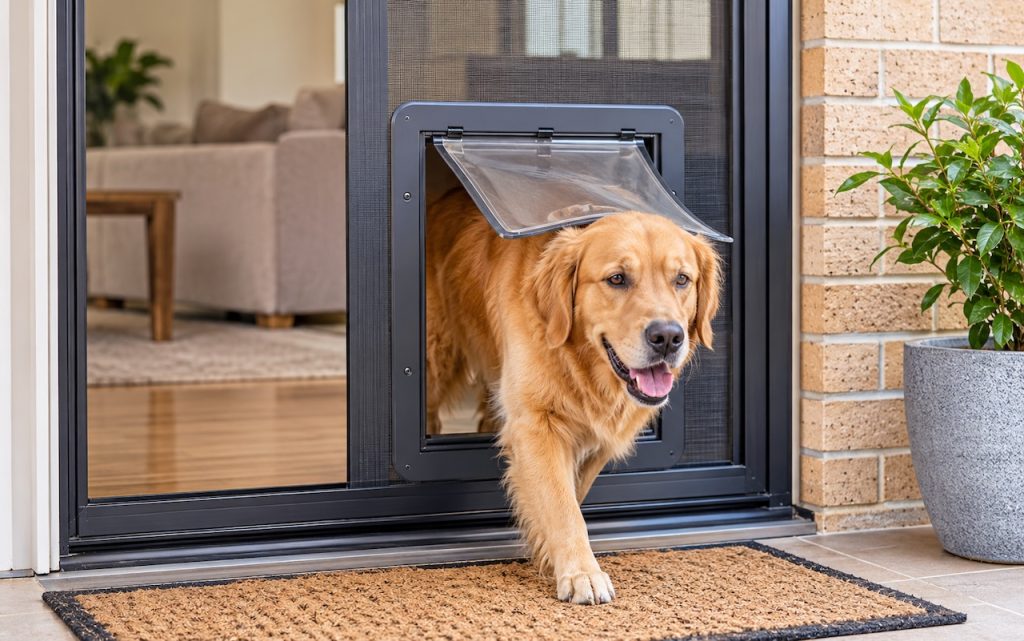
Which size pet door do you need?
Measure your pet first. The flap opening needs to be a little wider than their shoulders and taller than their shoulder height, so they walk through without ducking hard or squeezing.
The three sizes, with the flap opening shown as height x width:
- Standard (240 x 190mm): cats and small dogs. Black or white, from around $98.
- Medium (305mm high): small to medium dogs. Black or white, from around $125.
- Large (400 x 260mm): larger dogs. Black, from around $152.
If your pet sits between two sizes, go up a size. A tight flap teaches a dog to avoid the door, and the bigger opening costs little more.
Not sure which size suits your dog? Send us their measurements and we’ll help you choose.
Where should the pet door go?
Low down, with the bottom of the flap at about the height of your pet’s belly so they step over the frame comfortably. Side to side, there are two schools of thought.
Under the lock. This is the common choice on sliding doors. You only need to slide the glass door open a short way for the pet to get through, which matters on wet or windy days.
Away from the lock. On a hinged security door, a large flap close to the lock can give someone outside a way to reach through toward the handle. Placing the pet door on the hinge side, or centred, keeps that gap away from the lock.
For a cat or small dog, the standard door is small enough that either position works. For a large door on a security screen, keep it away from the lock. See our security door lock guide for lock options.
Can you fit a pet door to a security door?
Yes. These pet doors are made for security doors as well as fly screen doors. The pet door frame sits in an opening cut in the mesh and clamps both sides of it.
Two cautions for security doors:
- It changes the door. A security door’s strength rating applies to the door as it was made and tested. Cutting an opening means it’s no longer that tested door. If a rating matters to you, ask the door’s manufacturer first.
- Stainless steel mesh is hard to cut. The 316 stainless mesh used on most modern security doors needs a sharp cutting tool and gloves, and the cut edges are sharp. Many owners have the pet door fitted when the door is made instead.
Building a new security door? Order the frame cut to size and fit the pet door to the mesh before final assembly. That’s the easiest way to get a clean result. See our security door frame guide.
How is a pet door fitted to a screen door?
The exact method depends on the door and comes with the pet door’s instructions. The usual process on a fly screen door looks like this:
- Take the door off and lay it flat on a table or trestles, mesh side up.
- Mark the position at your pet’s belly height, square to the frame.
- Cut the opening in the mesh to the size in the instructions.
- Fit the two halves of the pet door frame either side of the mesh and screw them together.
- Re-tension the mesh where needed by rolling the spline back into its channel with a spline roller.
- Rehang the door and check the flap swings freely.
[VERIFY: confirm the cut-out size and fixing method from the pet door’s instruction sheet, and whether an adaptor is needed for fly screen doors]
New to spline and mesh? Our fly screen frame guide shows the technique.
Fitting a pet door and fixing the door at the same time? Browse screen door parts.

Black or white?
Pick the colour closest to your door frame. Black suits black security doors and most dark frames like Monument. White suits white and light-coloured frames like Surfmist or Pearl White. Our powder coat colour guide explains the frame colours.
Worn flap? Replace the flap, not the door
Flaps take a beating from claws and sun. If the frame is sound, a Petway flexible replacement flap for the small door costs from around $51 and swaps in without removing the pet door.
While you’re at it, check the door closes properly. A door that doesn’t latch defeats the point of the pet door. Our screen door closer guide covers adjustment.
Frequently Asked Questions
Can you put a dog door in a screen door?
Yes. A pet door made for screen doors fits through an opening cut in the mesh and clamps both sides of it. It suits hinged and sliding fly screen doors and security doors.
What size pet door do I need for my dog?
Measure your dog’s shoulder width and shoulder height. Choose a flap opening slightly wider and taller. Buy A Length stocks standard (240 x 190mm), medium (305mm high) and large (400 x 260mm) pet doors.
Can you put a cat door in a security screen door?
Yes. The standard 240 x 190mm pet door suits cats and fits security doors. Cutting a security door’s mesh changes the door from its tested design, so check with the manufacturer if a security rating matters.
Where is the best place to put a pet door in a screen door?
Low, at about belly height for your pet. On sliding doors, below the lock is most convenient. On hinged security doors, keep larger pet doors away from the lock so no one can reach through to it.
Can I replace just the flap on a pet door?
Yes. A replacement flap for the small Petway pet door is available from around $51 and swaps in without removing the frame.
Order a Pet Door for Your Screen Door
Buy A Length has supplied screen door parts to the Australian trade since 2006, with live stock counts on every item. Order a pet door on its own, or with the frame, mesh and closer for a complete new door. Orders are packed and dispatched within 1 to 2 business days.
Shop pet doors, browse all screen door parts, or call 1300 720 838 for help choosing a size.